Different Types of Smartphone Display's
TFT-LCD vs SUPER LCD vs IPS-LCD vs OLED vs AMOLED
Super AMOLED vs RETINA DISPLAY vs Mobile BRAVIA Engine vs Youm by Samsung.
Super AMOLED vs RETINA DISPLAY vs Mobile BRAVIA Engine vs Youm by Samsung.

Screen of a mobile phone or a smartphone is one of the key features, users concern when buying a new mobile device. It's the main hardware that ,user can interact with the embedded software and do various things.
Generation to generation the mobile phone screen has been evolved and today humans reached
the milestone of making flexible screens.
There are so many types of screens out there with different technologies and pixel arrangements. Earlier days we had dot matrix screens and later we managed to make them display colors and now time has taken us to the era of touchscreens where screens are capable of showing crisp images,colors and retina beating pixel densities. Lets see what are the most popular mobile phone screen types out there.
TFT-LCD
These screens are the most common screen types and used in entry level to high end smartphones. It's a variant of LCD screens. For example almost all Nokia color display phones use TFT LCD panels. TFT LCD stands for Thin Film Transistor Liquid Crystal Display. Unlike the normal LCD pannels, TFT LCD panels gives better image quality and also supports higher resolutions.
TFT screens consume lot energy. due to this, battery life of devices that use TFT screens are not good unless they have a higher capacity. Since TFT screens are cheaper to manufacture most smartphone manufacturers tend to use these panels. Viewing angles are not the best in TFT screens, It's the reason why most Sony Xperia Z users complain about viewing angles and less vivid colors of the device.

TFT screens often face the dead pixel problem, usually this happens when a single pixel died in the screen and whole pixel line vertically or horizontally to that pixel gets the same fate.
Here you can see a dead pixel row in a Nokia smartphone.
Another disadvantage of TFT screens are poor visibility in direct sunlight. therefore an ambient light sensor is a must have feature for smartphones with TFT panels.
SUPER LCD
Super LCD screens are another type of TFT LCD screens. But it's specially improved for low power consumption without reducing image quality. The latest from SLCD lineup is Super LCD 3, HTC J butterfly and HTC Droid DNA uses these kind of screens. These screens doesn't have an air gap between display element and outer glass like in ordinary TFT LCD panels. This makes the colors more accurate and reduce glare. Technology reviwers say Super LCD panels give more color definition than AMOLED screens.

You can see the performance of Super LCD 3 screen of HTC droid DNA with LG nexus 4 and Samsung Galaxy SIII, Note that Droid DNA has a 1080p screen while other two are 720p.
IPS-LCD
IPS LCD Stands for In Plane Switching liquid Crystal Display. This is another great improvement for LCD screens. The technology used here is arranging and switching Liquid Crystal molecules between the glass substrates in a plane, parallel to the glass layers. IPS panels does a great job when it comes to viewing angles. Unlike TFT screens, IPS screens are capable of wide viewing angles and less power consumption.

Apple corporation use IPS pannels with oleophobic coating (finger print resistant coating) for their recent products.
The Wammy Titan 3 phablet runs Android 4.2.1 Jelly Bean. It is a dual-SIM device with support for GSM+GSM. The smartphone features a 5.7-inch full-HD (1080x1920) IPS LCD display and boasts of a pixel density of 390ppi.
The Wammy Titan 3 phablet runs Android 4.2.1 Jelly Bean. It is a dual-SIM device with support for GSM+GSM. The smartphone features a 5.7-inch full-HD (1080x1920) IPS LCD display and boasts of a pixel density of 390ppi.
OLED
OLED screens made another milestone in Screen technology. It stands for Organic Light Emitting Diode,a totally different and impressive screen technology when compared to normal LCD screens.
OLED screens doesn't need a backlight pannel , the pixels light up by them selves. That's why OLED screens have deep black colors, if there were a backlight panel light makes black color look bit more grey.

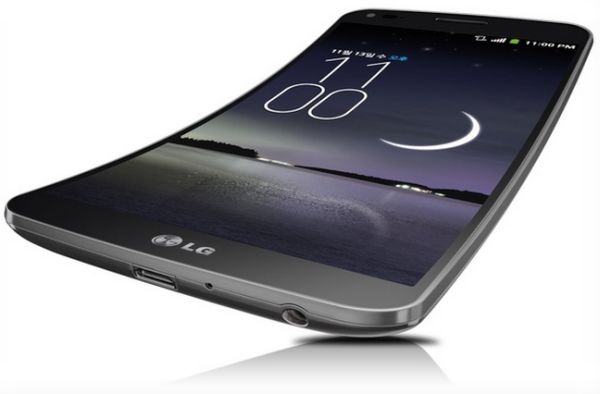
The G Flex sports a 6-inch, 1280 x 720 resolution P-OLED display, which sees the display and panel built on plastic substrates instead of glass. Real RGB technology has been incorporated – where red, green and blue subpixels are all contained in one pixel – for a brighter and more precise onscreen image.
OLED pannels are very thin and consume low power. Therefore it's really helps to long last the battery. Some of key benifites of OLED screens are it's stunning color reproduction, wider viewing angles and fast response time.
AMOLED
 AMOLED (Active-Matrix Organic Light-Emitting Diode) is a display technology for use in mobile devices and televisions,is actually fairly old but their emergence on the market at high end screens is recent. AMOLED screens consist of a thin layer of organic polymers that light up when zapped with an electric current. Due to this simple construction, AMOLED screens can be extremely thin and don’t require a backlight. The benefit of losing a backlight is readily apparent: these screens are able to produce blacks so deep that the screen pixels can shut right off. Shutting off pixels can also save electricity and battery life in phones and tablets.
 |
| You'll find an AMOLED screen in the iPhone's chief rival, Samsung's Galaxy S III |
Super AMOLED
Samsung electronics have the honor of making Super AMOLED screens. It's their own term for the AMOLED panels that they develop. Super AMOLED screens are built with capacitive touch sensors on the display itself. these sensors helps to improve more touch response than it's predecessor AMOLED. Samsung has already took it's SMOLED screen to next levels by developing Super AMOLED+, HD Super AMOLED+ and FHD Super AMOLED+ screens.


Samsung Super AMOLED
vs
iPhone 4 IPS Retina Display
|
Apple's iPhone 4 "Retina" display |
RETINA DISPLAY

Retina display is not actually a screen
type though some people think it is. It's the name patent by Apple corporation for the screens they used in their iPhone and iPad lineup.
Apple use LED backlit IPS panel with a high pixel density which human eye unable to identify pixels individuality at a normal viewing distance.
Nowadays most high-end smartphones have screens with high pixel densities human eye could not differentiate.
LG and Japan Display Inc are the largest screen suppliers for Apple.

Mobile BRAVIA Engine
Mobile Bravia Engine is a software integration by Sony to improve natural colors and contrast of their screens. BRAVIA stands for Best Resolution Audio Visual Integrated Architecture. Sony has already introduced the 2nd generation Bravia engine with new improvements such as adding a sharpness filter and image/video noise reduction. Bravia Engine 2 can be seen on Xperia Z,ZL,SP and V. Since it's a software integration, user can turn it on/off as he like.

Youm by Samsung
Samsung showcased Flexible screens at CES 2013 but still haven't seen in a real life device yet. Youm is the name of Flexible screen patent by Samsung electronics. Samsung claims Youm screens are unbreakable and supports higher resolutions.It is a AMOLED panel of-course.


SM-G910S (aka Galaxy Round),the firsT smartphone sporting a YOUM display.
SM-G910S (aka Galaxy Round),the firsT smartphone sporting a YOUM display.
let me compare the popular smart phone display specifications:

When it comes to comparing the LCD and (AM)OLED technologies, we can sum up by saying that the LCD display panels come with more natural colors, higher brightness, and better outdoors visibility than the OLED screens. On the other hand, the (AM)OLED technology is unrivaled when it comes to reproducing “deep black” and almost 180 degree viewing angles. The AMOLED displays are also more energy efficient, but for all these you will have to pay the price of oversaturated colors.
Choosing an Android smartphone or tablet that has a display that is in concordance with your needs is not an easy task, but we hope that the information above will help you make a decision.
What display is your current smartphone or tablet using?
What display is your current smartphone or tablet using?

0 comments:
Post a Comment